那一场呼啸而过的青春
China-ASEAN Education Week 2026 wraps up in Guiyang, launches AI platform for traditional medicine_我的网站

A | (ECNS) – The 19th China-ASEAN Education Cooperation Week (CAECW) concluded in Guiyang, Guizhou Province, on Saturday, marking a significant push toward regional integration through digital learning and vocational training. Nearly 450 educators, policymakers, and industry leaders gathered to advance cross-border collaboration under the theme "Empowering a Friendly Community through Smart Education." This year's sessions produced several landmark agreements, including a framework for mutual recognition of vocational qualifications and the launch of the Ethnic Medicine AI Foundation Model, the first large-scale AI platform dedicated to traditional medicine. From Summit to Year-Round Platform Coinciding with the fifth anniversary of the China-ASEAN Comprehensive Strategic Partnership, the six-day event signaled a strategic shift in regional ties. Once a periodic summit, the CAECW is evolving into a year-round platform, with 60 additional activities scheduled across China, Thailand, Cambodia, Malaysia, and Indonesia this year-six of which will be hosted independently by ASEAN institutions. Digital Transformation at the Forefront Digital education dominated the agenda. Organizers launched the China-ASEAN Smart Education Capacity Co-Cultivation Program to narrow the regional digital divide by enhancing digital literacy and governance. Scale: The existing Duocai Smart Academy platform already offers over 350 multilingual courses from 112 institutions to 129,000 users. Access: A new ASEAN zone on China's National Smart Education Platform now provides virtual labs and AI-powered teaching tools. Innovation: The newly unveiled China-ASEAN AI Joint Innovation Laboratory will focus on applying AI to preserve and research ethnic medical traditions, such as those of the Miao, Dong, and Bouyei peoples, specifically targeting ASEAN markets. Breaking Barriers in Vocational Training In a major breakthrough for labor mobility, the International Mutual Recognition Scheme for Vocational Education Learning Outcomes was officially released. Covering 34 fields-from cross-border e-commerce and smart manufacturing to healthcare-the scheme aims to dismantle institutional barriers to talent flow. Complementing this, the "Guijiang Workshop" brand has expanded into a regional skills hub operating in Thailand, Laos, and Indonesia, exporting Chinese vocational standards in high-demand sectors like new energy and smart construction. Youth and Innovation Take Center Stage Youth engagement reached new heights, with the World University Innovation and Entrepreneurship Challenge attracting 1,007 projects from 149 universities across 11 countries. Peking University's team won the top prize for its cryo-electron microscopy technology platform. Other highlights included esports tournaments at Guiyang's X-Sci-Fi Valley and the "Speaking ASEAN in Chinese" language program. Organizers announced plans to host over 5,000 international youths in Guizhou over the next year. Strategic Outlook Since its inception in 2008, the CAECW has hosted over 54,000 participants from nearly 90 countries. Beyond education, the week serves as a pillar of soft power diplomacy, supporting the New International Land-Sea Trade Corridor and providing landlocked Guizhou with a vital gateway to Southeast Asia. "Education is the bridge, wisdom is the engine, and youth are the future," an organizer noted, emphasizing that the 2026 conclave marks not an endpoint, but a starting point for deeper, smarter regional cooperation. To ensure accountability, a year-round tracking system with project ledgers and quarterly reviews will monitor all signed agreements. 
 。
。
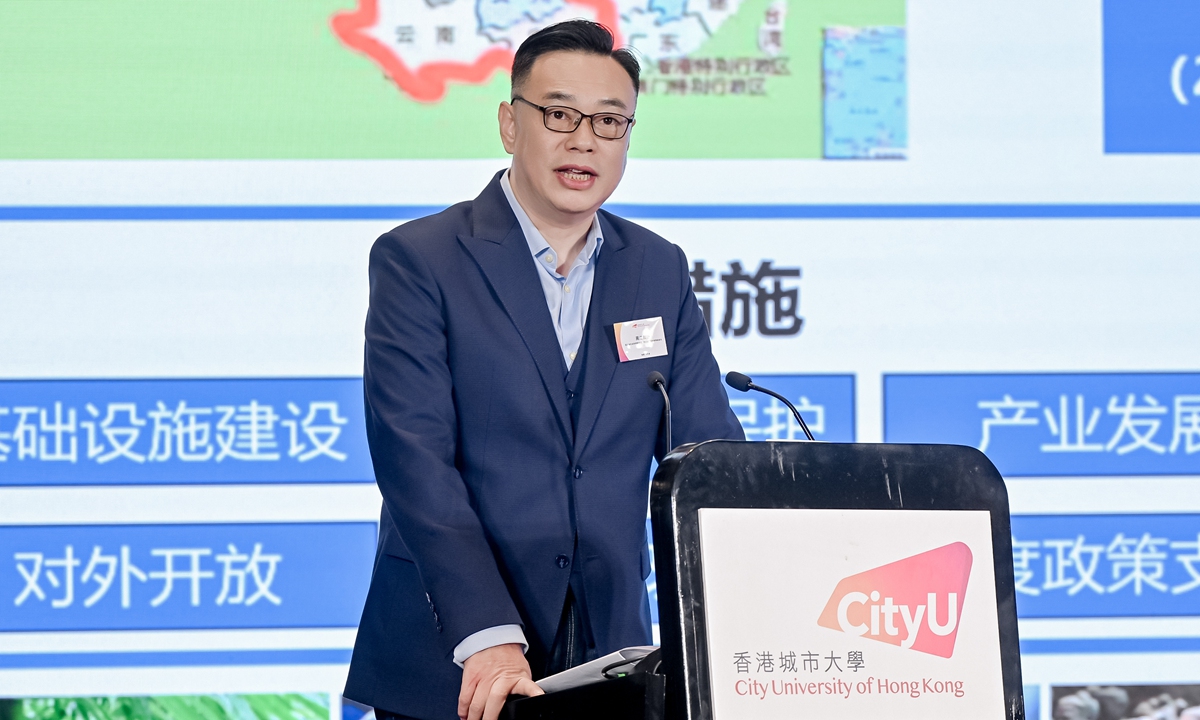
Zhou Jiang, a researcher at the Sichuan Academy of Social Sciences, has a favorite book: White Deer Tableland or Bai Lu Yuan by renowned writer Chen Zhongshi.
As vice president of the Regional Science Association of China (RSAC), Zhou told the Global Times that a lifetime of reading has profoundly shaped the way he sees and understands the world. It ultimately led him to a career in research and academia, where he teaches and pursues scholarly work.
Since earning his PhD in economics in 2000, he has devoted himself to the study of regional science and economics, a field that demands a constant crossing of disciplinary boundaries, drawing on the fields of geography, sociology, history, and ecology among others.
"Reading has kept alive my sense of curiosity and taught me to ask questions with patience and persistence: Where do disparities in regional development come from? How do policies affect different groups in society? And how can a region pursue both efficiency and equity so that development is not merely effective, but also imbued with a greater sense of humanity and warmth?" Zhou noted.
Founded in 1991, RSAC is a national academic society dedicated to advancing domestic and international academic exchange and cooperation, providing consulting services on spatial planning, urbanization, and regional development, and offering intellectual support for China's modernization drive.
The 57-year-old researcher noted that reading has empowered him in two distinct ways.
"The first is discernment. When confronted with a complex issue, I try not to settle for a simple conclusion. Instead, I make an effort to understand its broader context, how it has unfolded, and the perspectives of the different people involved," he said.
"The second is a sense of inner steadiness. Setbacks are an inevitable part of both life and work. Good books remind us that hardship is never ours alone to bear; countless people before us have faced circumstances more difficult than our own, made difficult choices, and found the strength to carry on. Reading cannot solve every problem for us, but it can help us remain calm when challenges arise, giving us the clarity and resilience that allow us not to panic or give up too easily," he said.
Historical depth
Each time Zhou returns to the White Deer Tableland, he finds something different in its pages.
"When I first read it as a young person, I was drawn primarily to the characters and the twists and turns of their lives. Later, as I began researching regional economics, I found myself paying closer attention to the changes in the land, the countryside, families and social order presented in the story. Now, approaching 60, I have come to appreciate more deeply the choices the characters make, the constraints they face, and the quiet perseverance they show amid the sweeping currents of their times," he said.
White Deer Tableland uses Bai Lu village in Northwest China's Shaanxi Province as a microcosm, tracing the feuds and intertwined fortunes of three generations of the Bai (literally meaning white) and Lu families. Through their stories, it captures more than half a century of sweeping historical change, from the final years of the Qing Dynasty (1644-1911) to the 1970s and 1980s. The novel won the Mao Dun Literature Prize, one of China's top literature awards, in 1997.
Zhou prefers literary works with historical depth and a keen eye for social change.
Regional economics may appear to be concerned with the spatial distribution of industries, population and resources, but at its heart, it is about how people live on a particular piece of land, and why some places flourish while others decline, he noted.
In this sense, literature and history are more than pastimes beyond professional research. They often help him understand the historical context, cultural traditions and social mentality that lie behind economic data, he said.
When reading novels, Zhou said that he often pays close attention to the relationship between people and the places they inhabit: How the land shapes the local character, how transportation transforms a region, and how shifts in industry reshape families and villages. Such details may not offer a direct conclusion, but they broaden a researcher's perspective. They also serve as a reminder that research should look beyond growth rates and statistical indicators to consider the sense of fulfillment experienced by ordinary people and the dignity of human beings.
Understanding ourselves
Once, while tidying his study, he came across a book filled with notes he had scribbled in his early years. Among them was a question that particularly caught his attention: "In the face of sweeping changes in the times and profound social transformation, what can a person truly determine for himself?"
Looking at those words he had written in his youth was like coming face to face with the person he had been decades ago.
Reading is not simply the act of understanding a book; it is also a record of a person's own growth, he said. The same book can reveal something entirely different when read at different stages of life.
When we are young, we turn to books in search of answers; but when we become seasoned, we read more to understand life, to understand others, and ultimately, to better understand ourselves, Zhou said.
In this era of fragmented information, AI can help people access information quickly, organize materials, and gain a basic understanding of unfamiliar fields. Yet deep reading, Zhou said, allows people to see how a conclusion is reached — what evidence supports it, where its boundaries lie, and what alternative interpretations it may invite.
What truly shapes a person, after all, is not how much information they have browsed, but the words that have made them pause and reflect - and the words that have remained with them for many years, he added.
。
Current article:http://oyel0hy.shuicengchongmingnouhuawang.bond/list_4uu/7xzbm9.html
Published on:02:42:42
 大腕
大腕 五星酒店潜规则
 hold
hold 追梦赤子心
追梦赤子心 心的唯一
心的唯一 海贼王
海贼王 大话西游
大话西游 田径女神走红


